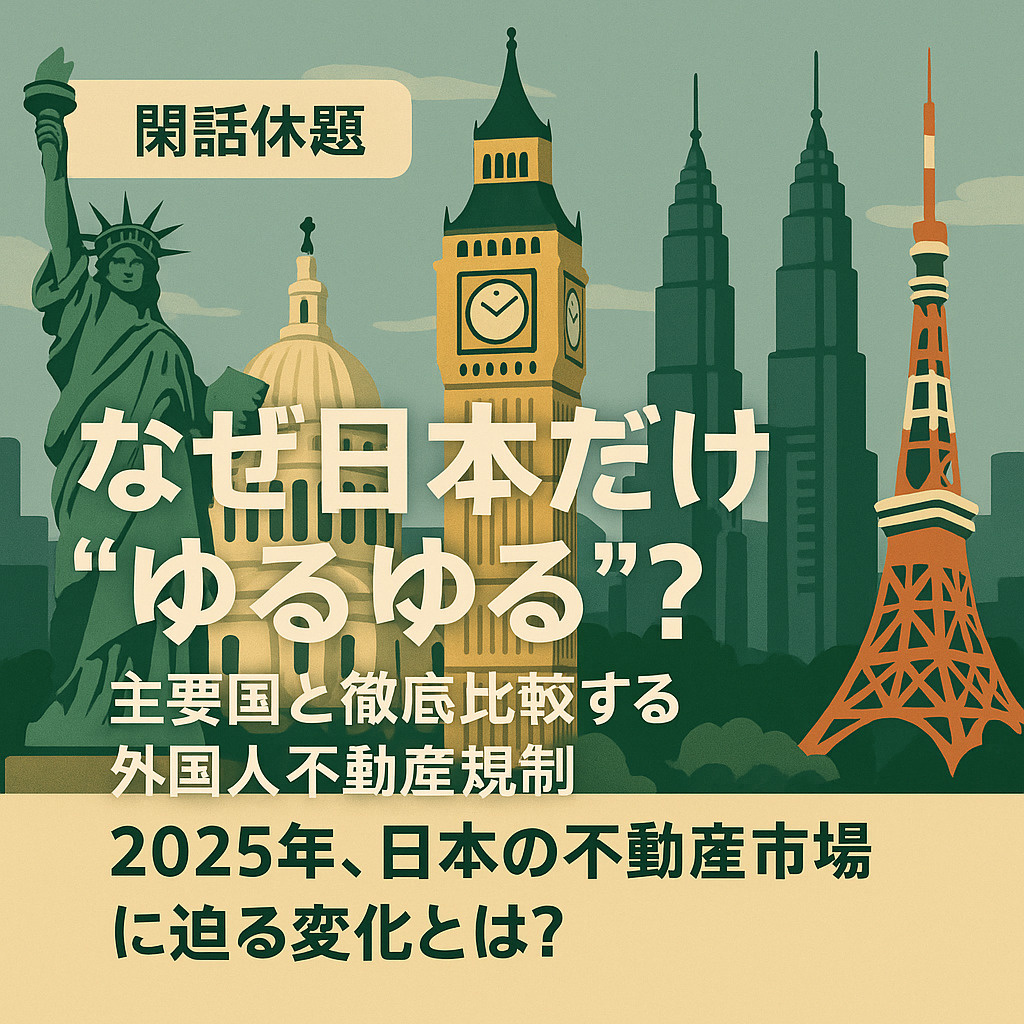
【閑話休題】なぜ日本だけ“ゆるゆる”?主要国と徹底比較する外国人不動産規制 ― 2025年、日本の不動産市場に迫る変化とは?
■ はじめに|世界と比べると、日本の“不動産の自由度”は突出している
2025年現在、日本の不動産市場は 世界的にも珍しいほど“誰でも自由に買える”仕組み になっています。
外国人購入の制限なし
税率は日本人と同じ
購入時の行政登録なし
法人名義でも自由
マネーロンダリング関連の規制も軽度
これは、世界の主要国とは真逆の状況です。
この記事では、京都を含む日本の不動産市場を、アメリカ・英国・オーストラリア・シンガポールなどと徹底比較しながら、
「なぜ日本は規制がゆるいのか?」
「今後、規制は入るのか?」
「売主にとってチャンスなのはいつなのか?」
を深掘りします。
■ 主要国・主要都市の「外国人不動産規制」徹底比較
オーストラリア(シドニー)|世界最強クラスの規制
外国人は 新築のみ購入可(中古は原則NG)
FIRB承認が必須(審査あり)
追加税 3〜8%
売却せず放置すると罰金
→ 投機目的の抑制が目的。
ニュージーランド|事実上の“ほぼ全面禁止”
既存住宅の購入は外国人ほぼ不可能
新築も用途制限が厳しい
→ 住宅高騰の国民不満から規制が急増。
カナダ|外国人住宅購入禁止(2027年まで延長)
外国人購入禁止を全国で適用
州ごとに追加税(20〜25%)
→ 投資資金の流入抑制。
シンガポール|追加税60%という世界最強の税制
外国人は自由に買えるが
→ ABSD 60% の超高額追加税!土地所有は原則禁止
→ 完全に投機防止型の市場。
中国|都市ごとに強烈な制限
外国人は1人1戸まで
居住年数と納税実績が必須
ローン規制も厳しい
韓国(ソウル)|2024年から外国人購入登録制度
住宅購入は行政への登録義務
違反は罰金
追加税導入の議論も加速中
アメリカ(ニューヨーク)|表面は自由、実態は“税金でコントロール”
購入は自由
しかし…
マンション税・譲渡税・固定資産税が超高額
Mansion Tax:1〜3.9%
Transfer Tax:0.4〜1.4%
固定資産税は年間数十万円〜数百万円
さらに
UBO(最終受益者)開示義務
FinCENによるマネロン監視も強い。
→ 外国人の買い占めを“税制と監視”で抑えている都市。
イギリス(ロンドン)|買えるが“持ち続けるのが世界一高い”
Stamp Duty(印紙税)が最大17%超
Non-UK Residentsは追加2%
空き家税(Empty Homes Tax)は 最大300%
海外法人はオーナー情報公開義務
→ “自由”に見えて「最も重い不動産税都市」のひとつ。
■ では日本は? 2025年時点で“世界でも例外的に自由”
日本の特徴:
✔ 購入制限ゼロ
✔ 追加税ゼロ(外国人向けの特別税なし)
✔ 税制は日本人と完全同一
✔ 購入登録義務なし
✔ UBO開示なし
✔ 空き家税は自治体レベルの軽度なもののみ
✔ 保有コストは世界で最も安い部類
→ これは先進国では日本のみ。
■ なぜ日本だけここまで“ゆるい”のか?(理由5つ)
1. 歴史的に「土地所有の自由」が強固
2. 外資受け入れを重視
3. 空き家820万戸 → 市場縮小を恐れている
4. 不動産価格が長年低迷してきた歴史
5. 国際都市化(京都・大阪・北海道)による需要増
■ 日本で実際に起きていること
京都の高額物件が海外富裕層に人気
北海道のリゾート開発への外国資本流入
東京のホテル・オフィスの外資買収が加速
そして 京都は“文化資産”として特に人気が高い。
■ 2025年以降、日本でも規制が入るのか?
“可能性は高い”が現状はまだ…。
国会にはすでに「外国人土地取得規制案」が提出済み
韓国と同様の“購入登録制度”の検討も進む
京都や北海道では住民の問題意識が上昇
最も現実的なのは:
① 購入登録義務
② 外国人追加税
③ 特定エリア(京都の保全地区)での制限
■ 売主が知るべきこと
✔ 規制が始まる前の“2025〜2026年が売却の黄金期”
✔ 外国人需要を最大化するには「英語対応 × 国際経験がある仲介会社」が必須
✔ 京都は特に海外需要が強いため、売却戦略次第で大きく差が出る
■ まとめ|日本は“世界で最後の完全開放型市場”。売却には追い風
ニューヨーク、ロンドン、シドニー、シンガポールなど
世界の主要都市はいずれも規制・追加税・公開義務で市場を調整しています。
しかし日本は、2025年の今でも “完全自由”。
それは
→ 売主にとって外国人需要を取り込む最大のチャンス
です。
京都市場の特性と海外投資家の行動様式を理解したプロによる売却戦略が、今こそ重要です。
=====English Version=====
Why Is Japan So “Open”?
A Global Comparison of Foreign Property Regulations in 2025
■ Introduction
Japan remains one of the few advanced countries where foreigners can freely purchase real estate without restrictions.
No extra taxes, no registration requirements, and no ownership limits.
This article compares Japan with major markets such as New York, London, Sydney, Singapore, and others to understand:
Why Japan is exceptionally open
Whether regulations may tighten in the future
What this means for sellers—especially in Kyoto
■ Global Comparison of Foreign Property Regulations
Australia (Sydney)
Foreigners can buy new properties only
FIRB approval required
Extra taxes of 3–8%
Penalties for holding unused properties
→ Strict anti-speculation policies.
New Zealand
Foreigners cannot buy existing homes
New-build investment also restricted
→ A near-total ban.
Canada
Foreign home purchases banned nationwide until 2027
Additional 20–25% taxes by province
Singapore
Additional Buyer’s Stamp Duty (ABSD): 60%
Land ownership restricted
→ One of the world’s toughest tax regimes.
China
1 property limit for foreigners
Residency and tax history required
Mortgage restrictions apply
South Korea
Foreign purchase registration required (2024–)
Penalties for non-compliance
Additional taxes under discussion
United States (New York)
Foreigners can buy—but heavy taxes apply
Mansion Tax: 1–3.9%
Transfer Tax: 0.4–1.4%
High annual property tax
Mandatory disclosure of Ultimate Beneficial Owner (UBO)
→ A “free but heavily controlled” market.
United Kingdom (London)
Foreigners face additional 2% stamp duty
Maximum stamp duty exceeds 17%
Empty Homes Tax up to 300%
Mandatory owner registry for overseas companies
→ Freedom to buy, but extremely costly to hold.
■ Japan in 2025: One of the World’s Most Open Markets
Japan stands out:
No foreign purchase restrictions
No extra taxes
Same tax rules as Japanese citizens
No UBO disclosure
No purchase registration
Low holding cost compared to global cities
→ Japan is the last fully open major real estate market.
■ Why Is Japan So Open?
Historical emphasis on land ownership freedom
Government encourages foreign capital
8.2 million vacant homes
Long-term market stagnation
Rapid internationalization of cities like Kyoto, Osaka, and Tokyo
■ What Is Actually Happening?
Kyoto luxury homes are popular among global high-net-worth buyers
Foreign capital expanding in Hokkaido resorts
Large-scale acquisitions of Tokyo hotels and offices by overseas investors
Kyoto, in particular, is valued as a cultural asset.
■ Will Japan Introduce Restrictions in the Future?
Possibly.
Japan is already tightening other areas (e.g., inheritance registration rules), and several proposals for foreign ownership regulations have been submitted to Parliament.
Likely future measures:
Purchase registration system
Additional taxes for foreigners
Area-specific restrictions (e.g., cultural preservation areas in Kyoto)
■ Key Takeaways for Sellers
✔ 2025–2026 is likely the “golden window” before any future regulations
✔ Foreign-buyer demand remains strong, especially in Kyoto
✔ Sellers should work with agents who understand international buyers and can respond in English
■ Conclusion
Compared to New York, London, Singapore, and Sydney—
all of which tightly control foreign purchases through taxes and regulation—
Japan remains exceptionally open.
This creates a unique opportunity for sellers, especially in high-demand markets like Kyoto.
Imai Properties supports valuation, sale strategy, and foreign investor outreach with bilingual services to maximize results.