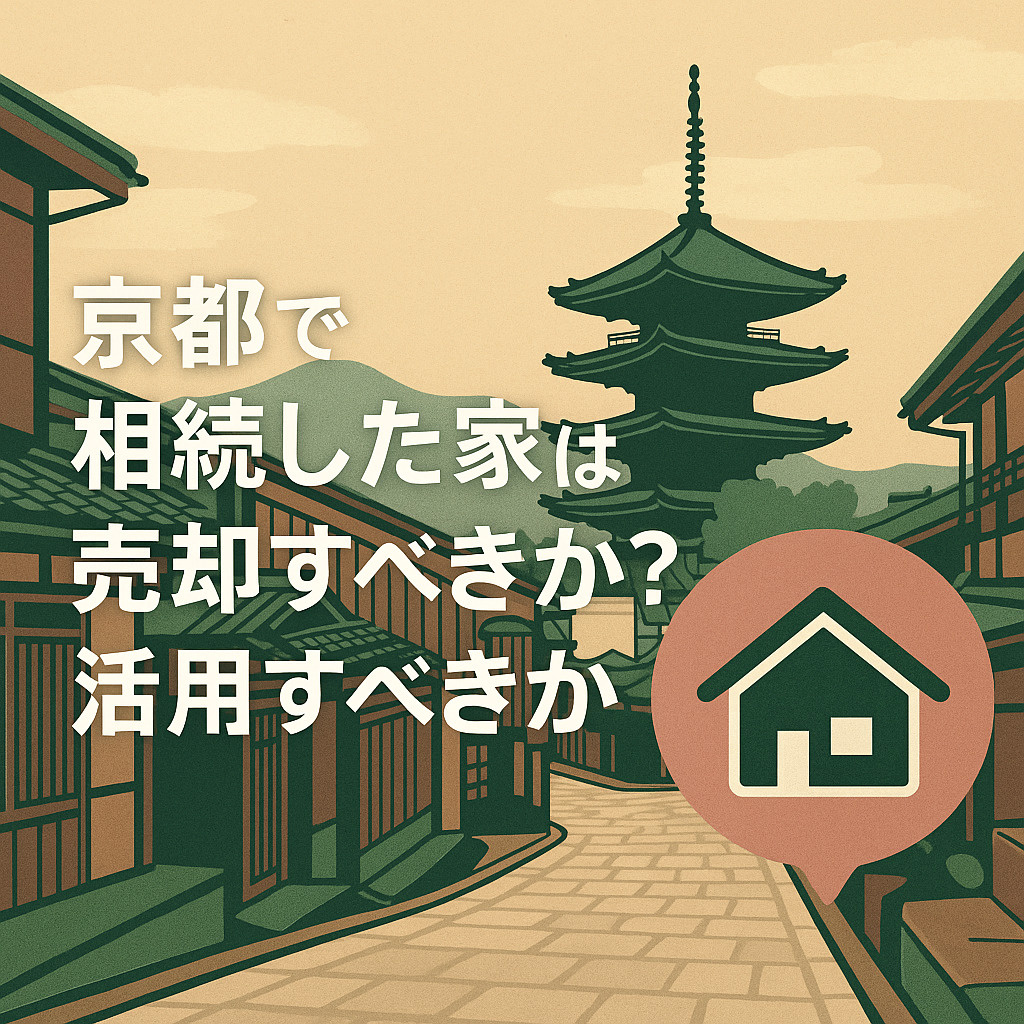
京都で相続した家は売却すべきか?活用すべきか? ── 相続3年ルールと京都特有の事情から考える最適解
京都で実家や不動産を相続したとき、
「売却すべきか?」「活用すべきか?」 は多くの人が直面する最初の悩みです。
特に近年、相続を取り巻く制度が大きく変わり、
“相続発生後にゆっくり考える” 時代は完全に終わりつつあります。
京都の不動産市場は全国でも特殊な傾向が強く、
放置しておくと「資産」になりうるものも「負債」に変わりかねません。
本記事では、
-
相続後に必ず確認すべき法律変更
-
京都だからこそ注意すべきポイント
-
売却と活用の判断基準
-
事前に備えるべき“相続アドバイザー”の必要性
を整理して解説します。
1. 相続不動産の扱いは“3年以内の判断”が必須に
■ 相続登記の義務化(2024年4月〜)
相続で取得した不動産は、
相続発生から3年以内の登記が義務化 されました。
違反すると最大10万円の過料が科される可能性もあります。
→ 「とりあえず名義変更は後で」 が通用しない時代に。
2. 京都ならではの相続不動産のリスク・特徴
■(1)“古都”ゆえの建築規制が多い
京都市には景観条例があり、建築・増改築の制限が非常に多い地域です。
敷地の広さや接道状況によっては再建築不可となることもあります。
→ 相続後に
「この家、建て替えできないの?」
となるケースが現実に発生します。
■(2)“空き家率が上昇中”で放置すると価値が下がる
京都市の空き家率は約15%前後で推移。
特に右京区・北区・東山区は老朽化物件が増加。
老朽化が進むと…
-
建物価値がゼロになる
-
解体費用が大きくなる
-
近隣トラブルの原因に
-
固定資産税だけ払い続けることに
→ 放置は 資産劣化 → 負債化 の最短ルート。
■(3)“京都だから売れる”は幻想
京都は人気観光地のため、
「どんな家でも売れる」と思われがちですが、実際は逆。
売れにくい不動産の典型は:
-
再建築不可
-
道路幅が狭い“京都特有の路地奥(ろじおく)”
-
古民家すぎて修繕費が高額
-
区分所有で管理状況が悪い
京都特有の地形や歴史に左右され、
売却の難易度は物件によって極端に異なります。
3. 結論:相続後は「3つの選択肢」から検討するべき
京都の相続物件は、以下の3択が基本です。
① 売却する(もっとも現実的な選択)
向いているケース:
-
建物が古く修繕が必要
-
他の相続人と共有のまま
-
空き家として維持費が重い
-
実家に戻る予定がない
-
早期に現金化したい
京都では“土地だけに価値がある”ケースが多く、
老朽化した建物を残すよりも更地売却のほうが高値になる場合も。
② 賃貸として活用する(収益化)
築年数によっては、
-
戸建賃貸
-
外国人向け長期滞在用
-
海外赴任者向けファミリー賃貸
-
企業社宅として貸す
など、多様な活用が可能。
京都は大学・研究機関が多く、
外国人研究者・留学生ファミリーの需要が安定しています。
③ 民泊・簡易宿所として活用(要注意)
京都は観光都市ですが、現在は
民泊規制(条例)が全国トップクラスに厳しい ため、
誰でも運営できるわけではありません。
立地・用途地域・近隣状況をクリアしないと許可は下りません。
4. 最も重要なのは“相続前の準備”
相続が起こってから動くと、
-
家族間の意見が割れる
-
空き家期間が長期化
-
税務判断が遅れる
-
修繕費が膨らむ
という問題に直面します。
そのため相続は
「発生した後に考える」のではなく、
“事前に良い相続アドバイザーを持つ”ことが必須。
税務・不動産・建築の3領域を俯瞰して判断できる専門家チームこそ
京都の相続では特に必要です。
5. =MAI PROPERTIES ができること
-
京都特有の評価ポイントを踏まえた現地調査
-
売却/賃貸/活用プランの比較提案
-
海外在住相続人への英語対応
-
税理士・司法書士との連携
-
相続前相談(事前シミュレーション)
京都と海外をつなぐ当社だからこそ、
相続不動産を“負債”ではなく“資産”へと導くサポートが可能です。
まとめ
京都で相続した家は、
-
建物状況
-
法規制
-
市場性
-
家族の意向
-
ランニングコスト
を総合的に判断し、
「売却」「賃貸」「その他の活用」 の中から
最適な選択をする必要があります。
特に法改正により3年以内の対応が求められるため、
早期の判断と専門家への相談が重要です。
===【English Version】===
**Should You Sell or Keep an Inherited Property in Kyoto?
Understanding Key Legal Changes and Kyoto-Specific Considerations**
When you inherit a house in Kyoto, one of the first questions that arises is:
“Should I sell it, or should I utilize it?”
In recent years, several major legal reforms have dramatically changed how inherited properties must be handled.
The era of “I’ll think about it later” is over—especially in Kyoto, where unique regulations and market characteristics can turn an asset into a liability if left unattended.
This article explains:
-
The new legal requirements after inheritance
-
Kyoto-specific risks and restrictions
-
How to evaluate selling vs. utilizing the property
-
Why preparing an advisor before inheritance is essential
1. The “3-Year Rule”: Inherited Properties Now Require Prompt Action
■ Mandatory Inheritance Registration (from April 2024)
Anyone who inherits property must register the ownership within three years.
Failure to do so may result in a fine of up to 100,000 yen.
→ You can no longer postpone ownership transfer after inheritance.
2. Unique Risks for Inherited Properties in Kyoto
■ (1) Strict regulations for construction and renovation
Kyoto has some of the nation’s toughest zoning and scenic preservation rules.
In certain areas, rebuilds or major renovations are restricted, and some properties may even be classified as non-rebuildable.
→ Many heirs discover only later that “the house cannot be rebuilt.”
■ (2) Rising vacancy rates lead to rapid deterioration
Kyoto’s vacancy rate remains around 15%, with aging houses increasing across many wards.
Leaving a house vacant results in:
-
Accelerated deterioration
-
Higher future demolition costs
-
Risk of neighborhood complaints
-
Ongoing fixed asset tax payments
→ Neglect can quickly turn an asset into a burden.
■ (3) “Because it’s Kyoto, it will sell” is a misconception
Kyoto’s real estate market is highly polarized.
Difficult-to-sell properties include:
-
Non-rebuildable lots
-
Narrow alley access (“roji-oku” lots)
-
Severely deteriorated machiya
-
Condominiums with poor management
Demand varies greatly depending on location and condition.
3. Your Three Main Options After Inheritance
① Sell the property (often the most practical choice)
Best suited when:
-
The house needs major repairs
-
Ownership is shared among heirs
-
You do not plan to live there
-
You wish to convert the asset into cash
In Kyoto, the land is often more valuable than the aging structure.
② Utilize it as a rental property
Potential uses include:
-
Single-family rental
-
Long-term rental for foreign residents
-
Housing for researchers, expats, or families
-
Company housing (corporate lease)
Kyoto has strong demand from international academics and expat families.
③ Convert it into a guesthouse (with caution)
Kyoto has some of the strictest regulations for short-term rentals.
Only certain zones and conditions qualify.
4. The Most Important Point: Prepare Before Inheritance Occurs
Waiting until after inheritance often leads to:
-
Disagreements among family members
-
Delays in decision-making
-
Unnecessary tax burdens
-
Increased deterioration
This is why a reliable advisor—before inheritance—makes all the difference.
A coordinated approach between real estate, legal, and tax professionals is essential in Kyoto.
5. How IMAI PROPERTIES Supports Inherited Properties
-
On-site evaluation based on Kyoto-specific regulations
-
Comparison of selling, leasing, and utilization strategies
-
Support for overseas heirs (English communication available)
-
Coordination with tax accountants and judicial scriveners
-
Pre-inheritance consultation and simulations
Our mission is to help clients turn inherited properties into valuable assets—not liabilities.
Summary
Inherited houses in Kyoto require careful evaluation of:
-
Building condition
-
Legal restrictions
-
Market demand
-
Running costs
-
Family intentions
With the new legal reforms, acting within three years is essential.
Early consultation with experienced professionals will help ensure the best outcome.